
Daniel Mutai
Co-founder and tech lead, SpaceFix Digitals
Key Takeaways (TL;DR)
- Invisible Revenue Loss: Businesses without websites lose 20-35% of referred customers during the verification step.
- Referral Gaps: Even strong word-of-mouth fails when prospects can't verify you online.
- Social Media is Rented Space: You don't own your audience on platforms; a website is your dedicated digital property.
- Trust Factor: 1 in 3 shoppers avoid businesses that lack a website.
- 24/7 Sales Agent: A website works around the clock answering questions and building credibility.
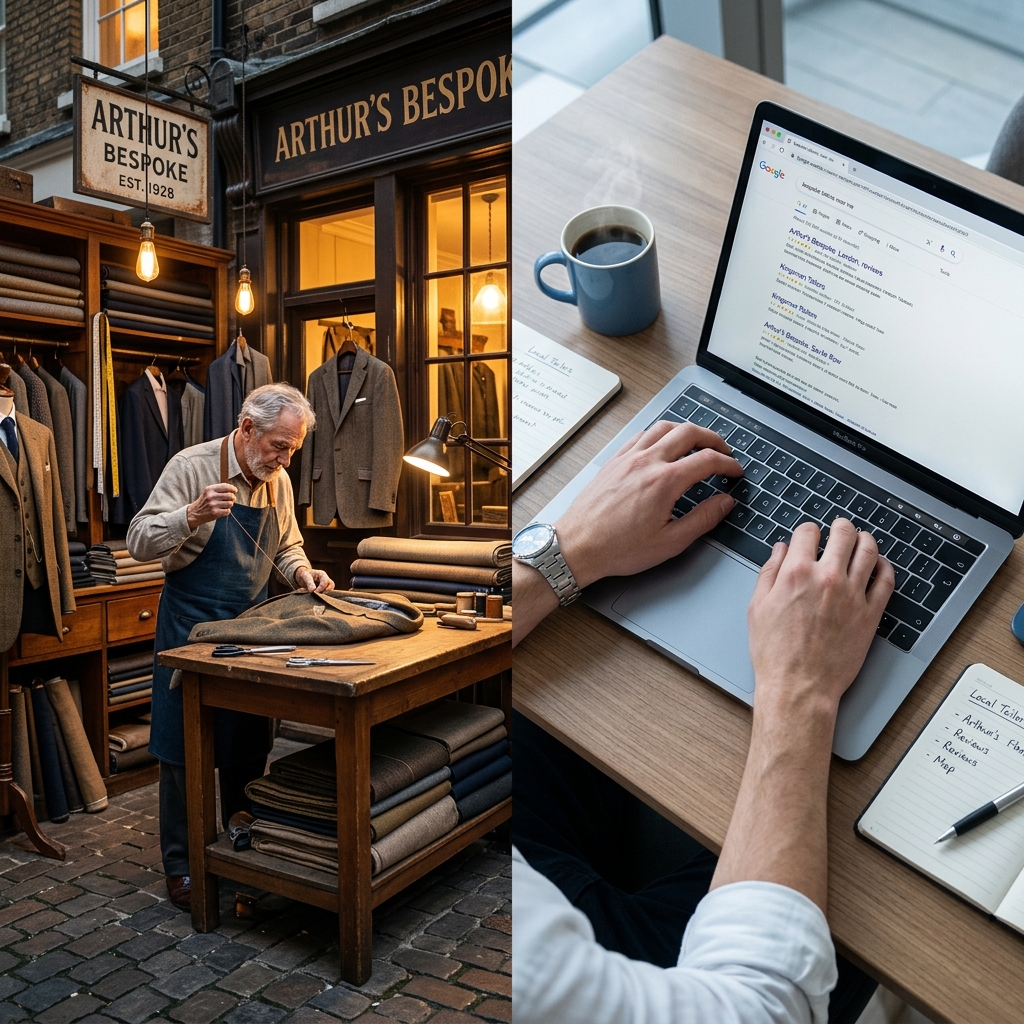
In many conversations I've had about the digital landscape, a recurring phrase almost always crops up: 'my business is doing well, I don't really need a website', and in all honesty, that seems like a valid angle. I've run a cloth tailoring business before, when a client walked in and inspected my workspace, I could study their body movement and get to know areas to tighten, but the digital domain seems different, there's a lot outside of our perception, I didn't see the dozens of people in need of my services, that lady who really needed a business suit in preparation of her new role as a data analyst, and because I can't perceive all of this, I fail to acknowledge its urgency.
Revenue Leakage
Google consumer research conducted a study and found out that local businesses without a website lose an estimated 20 - 35 percent of their referred customers during what is referred to as the verification step, and without committing too much to jargon, this is the window between when a lead hears about a business and makes a decision on whether they'll engage with it.
That estimated chunk seems huge, from where I sit. If every month I were to see an average of about 10 clients a month, and the average buyer spends an average of KSH 8000, that would imply a loss of around 16 - 24 thousand Kenya shillings every month. If I were to factor in all the months we have in a year, the true size of the loss becomes crystal clear. I mean, relative to the costs of running a basic and clean website, the costs appear way less.
💰 Calculate Your Revenue Leakage
Drag the sliders to see how much your business could be losing.
MONTHLY LOSS
KSH 16,000
YEARLY LOSS
KSH 192,000
That's what is referred to as an invisible loss; these are unintentional or unperceived losses that stem from inefficiencies that could've otherwise been avoided.
What happens after a referral
" Ugh, the office party is next week and I don't have anything to wear", "Don't stress it, mate. Hey if it helps, I have my tailor Dan he'll whoop up a nice outfit just in time. Trust, mate.", James, leaves that conversation a lead, and begins to research about, my services. I make an appearance on Google Maps Listing, find my number, but where it says "website" seems to be missing. There are actually two versions of how this could play out.
The first one, they trust those who referred me to them, and I make a sale. The second one, which to my surprise happens about half the time according to patterns observed in local business research, there's some bit of hesitation, James sees another listing, and they have a website, a proper one too, they inspect their service pages, past work and their philosophy and decide to give this one a chance. In this version, I lose out; it's not always the case, but it's a case, nonetheless, if I had a proper website to back me up, in both these versions, I would've stood a chance.
🔀 The Referral Journey — Click a Path
✅ Has a Website
→ Views services & past work
→ Reads reviews & philosophy
→ Feels confident
📞 Makes contact
❌ No Website
→ Finds only a phone number
→ Can't verify credibility
→ Feels hesitant
👋 Picks a competitor
My customers aren't really online
I happen to serve my customers to the best degree in my neighbourhood; they drive past, come and go, and we have a level of trust with them. I can't seem to make the argument that my clients have stemmed from an online source; they are purely physical. Until I came across an article about a woman who sold porridge online and began expanding her client base beyond her local area. Or how the same clients within my locality, whom I've served, were to travel to a different locality, and what they tend to do first. I do it myself; Kibada, Kigamboni, Dar es salaam received me with warm hands and whilst they hosted me warmly, I had to make prior research online - where to go, places to be, businesses to engage with, and usually I'd tend to go with the businesses found online or have some level of online establishment, the better presented they were the more I felt secure with their operation, for instance, if a business only had a social media presence and their competitor had a google my business, I'll be biased to favour the latter, and if they had a website, my eyes were locked in to them.
of consumers research a business online before visiting or making a purchase
Turns out, this isn't an individual way of doing things. Over 80 percent of consumers now research a business online before visiting or making a purchase, I'm talking across demographics and industries. That number has climbed every year for the last decade, and it is not going back down. If this is true for the businesses I've applied to, what about me? I realised, that whilst it is indeed the case my established businesses are physical, I'm only insisting on being blind to the potential businesses that can stem from an established online presence, and usually whenever I seek a new business I'll tend to google for appropriate service providers, and if I don't appear, well someone will, and that's a missed opportunity.
Being careful with the word-of-mouth approach
James was a lead who primarily got to know of my business when a client of mine told them about me. That's usually a powerful means to acquire new clients; someone was impressed by your work, and in turn, you or your business ends up being a topic in their conversations. If clients are happy, there's a probability they'll recommend you to somebody else, but the nature of this can be a double-edged sword. Note how I said happy? Or what if timing isn't right for the conversations to occur? There are just a lot of unpredictable factors outside the scope of our control. This method, I daresay is more of a retention strategy than an expansion one. How we communicate with our clients and the quality of our work, those should be reasons to make the customer stick with our business; a recommendation is but a bonus.
A well-set-up website with even a modest local SEO presence will bring you enquiries from people who had no idea you existed. This has been evidenced to me as time went by, think of it as a referral system that is active 24/7 and which can be managed, tracked and optimised. That, amongst many things, is why a website is crucial for businesses and startups.
"Think of your website as a referral system that is active 24/7 — one that can be managed, tracked and optimised."
Social Media is a great start (but not the full story)
Over the course of this business, social media has been a great tool I've gotten to leverage. I've made interactions that led to some enquiries, and I feel many business owners can relate to this. We are very active in our Facebook pages, we post, reply to comments and have amassed a following in doing so. But I came across an article that showcased how some businesses have suffered due to being barred from various platforms, and it dawned on me that social media is the equivalent of a rented space. It can be a great start, but it's not our space, and there are certain liberties we don't get to enjoy.
📱
Social Media
- 🏚️ Rented space
- 🎲 Algorithm controls reach
- 🚫 Can be banned/deleted
- 📉 <5% organic reach
- 🔒 Platform owns your audience
🌐
Your Website
- 🏠 You own it
- 🎯 You control the message
- ✅ Nobody can shut it down
- 📊 SEO rankings compound
- 🔓 Direct audience access
To damn the situation further, the algorithm decides how many of our own followers actually see our posts. Facebook's organic reach has been declining for years; some estimates put it below five percent, meaning if I have a thousand followers, fewer than fifty people see most of what I share. TikTok has faced potential bans in multiple countries. Vine, which millions of businesses once relied on, is gone entirely. X is a different product with a different audience than it was three years ago.
All this is outside of our control, yet oftentimes we seem complacent about this system. A website is a dedicated space on the internet that we can claim. Sure, it might not be as massive as the major tech corporates but it's ours; no one can delete our accounts. The search rankings we build over time are ours. When someone types our business names into Google, they find us, not a platform's version of us, but us.
And there's another grim aspect about social media in general, one that borders on a moral landscape, and that is, these platforms are designed to make the user scroll, to feed the thousands of content within their platforms to the user, which is the first step in how they make money. Without dissecting the morality of this too much, this does affect our business's overall conversion rate. On our own websites, the potential client gets to interact with our businesses directly, being guided gently to a conversion path for the business, and they, in turn, get their problems solved.
Social media is a great starting point; it grants us an initial digital space and a means to take advantage of the digital landscape, but it shouldn't be where the story ends, we need our own spaces to complete the puzzle.
It hurts the business when it's not found
When I began my programming journey, a laptop was a must; that's amongst the most basic prerequisites that are needed, and like all research topics, Google is mainly where we'll kick things off. Businesses upon businesses appeared, but again, I seem to be biased toward those computer shops that had a website. I Felt secured, I felt as if they wouldn't just take my money and make a run for it, you know. And what would you know, I'm not alone in this, a 2024 study found that 1 in 3 shoppers said they decided against buying from a small business because it lacked a website. Not because the product was bad. Not because the price was wrong. Just because the website wasn't there.
1 in 3
shoppers avoid businesses that lack a website
Source: 2024 Small Business Consumer Trust Study
A website becomes like a verification symbol, much like the mini tick on verified social media accounts; a sense of security stirs within when we see a business having a website. Indeed, those who know and have interacted with our businesses don't need to verify us; our previous work does that, but those who have yet to make contact with our business, curious about what we have to offer, will be extra careful when scrutinising our businesses.
First impressions now happen on screens before they happen in person, so we must make sure it appeals to the consumer.
"First impressions now happen on screens before they happen in person."
The impact of having a website
When I first encountered the term website, it sounded abstract, a norm that businesses practice. But now I can see how much better businesses have been made by having an established digital presence. Previously, we've mentioned how a website acts like a steady referral system that is open 24/7. To add to this, I realised that it also serves as a sales agent. It answers the same questions I'd normally answer on the phone, and when laid out well It handles the initial curiosity stage of every potential client relationship, so that by the time they actually contact me, they're already half-sold.
We've seen how we can tap into search traffic to people who've never heard of our businesses, how it serves as an essential credibility layer, and, to add to this stack, is the data we get from it: how many people actively click and check our businesses, what pages they read, and where they come from. What they do before they leave. That information makes every marketing decision sharper, over time.
The time is now
Owning a website and learning how to manage it is an essential must-have for every startup and business. And this isn't merely an anecdote but a trend written in the data from studies. Consumer reliance on online research before purchase is a one-way street. The percentage of people who buy or hire without checking online first is shrinking every year. The businesses without websites aren't just missing an opportunity; they're facing a slow compounding disadvantage that gets harder to reverse the longer it goes unaddressed.
A single, well-structured place online where someone can land after hearing your name and come away thinking: yes, this is real, this is for me, this is who I want to call. Can really go a long way. Complexities can be added later, but the foundations must be laid early on; it's not just a luxury but a necessity.
Because somewhere, right now, is someone in need of your business, they are searching for the niche, and if you don't at least appear, that's a missed opportunity.
"Somewhere, right now, is someone in need of your business. If you don't at least appear, that's a missed opportunity."
Hi, I'm Daniel Mutai, tech lead here at SpaceFix Digitals. We pride ourselves on making designs that are sure to communicate your brand's message to the user. We are here to ensure that your digital journey is done with ease and based on sturdy foundations.
Co-founder & Tech Lead, SpaceFix DigitalsNeed a Website That Works For You?
Stop losing customers to invisible revenue leakage. Let's build your digital foundation.
Connect with us at SpaceFix Digitals to begin your journey.