
Daniel Mutai
Co-founder and tech lead, SpaceFix Digitals
Key Takeaways (TL;DR)
- Design drives revenue: Companies prioritizing design grow 32% faster.
- Speed and Intent: UI must load quickly and guide the user's attention purposefully.
- Cognitive Fluency: Interfaces that feel fluid and respond to user inputs build trust instantly.
- AI and Search Engines: Search algorithms rely on structured, clean designs to understand and rank your content.
It's without a doubt that we're a complex species; we seem to know what we want yet we don't at the same time, this here fact is amongst the many reasons I battled with front end design, I lacked the comfort of formulas, sure the compiler will drive you to the mental ward as you try to figure out why it wouldn't run for the 100th time but at least there was a seemingly clear goal in mind. But upon further inspection, I realised that maybe I was wrong, maybe we can have a heuristic of sorts? A simple framework to guide us out of the torment of dealing with ourselves?
When I was puzzling this out, I happened to stumble upon a study from McKinsey, and they tracked 300 companies across a five-year span and with over two million pieces of financial data - finally, it feels like home. But to summarise, they found out that companies that gave design a priority, I'm talking structure, flow and how they are presented on the digital landscape had their revenues grow 32 percent faster than their competitors, their shareholder returns was a whopping 56 points higher, and to really validate that this isn't an industry fluke, similar results were observed across all 3 industries this study was run on.
It began to dawn on me how essential design is; most companies and startups might fail to consider its weight to their businesses, and this happens to be the first grave mistake made. Reality is, we seem to unconsciously reward companies that stand out from the crowd.
"If you want to stand out from the crowd, give them a reason not to forget you" - Richard Branson
Making it make sense
Design is essential, that's now well understood, but how to go about it? Not like there's an entire domain of digital design called UIUX principles that I can study, right?
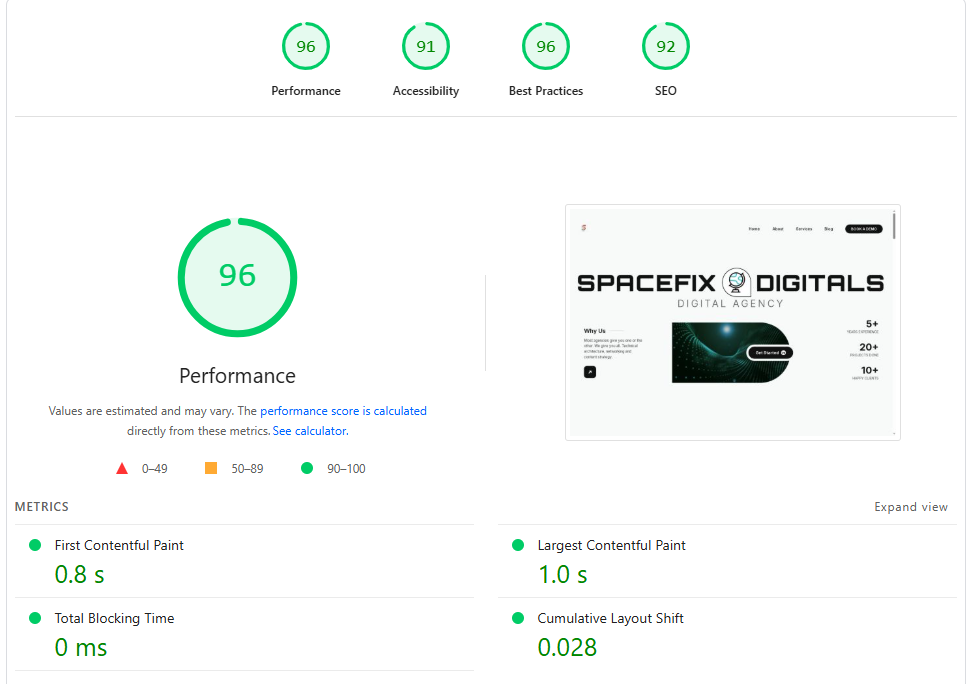
To really understand the implications of design, we must ask a very simple question: "What would my users think"? Putting yourself in your users' shoes, in particular those who are your core demographic, matters. I took my time and inspected some of the companies whose digital landscape is painted in a positive light and began to make some general observations. For one, most of the websites took a relative short time to load, this gave me an overall positive experience and first impression (and no I'm not just impatient - hopefully so), the ability to not wait around for an eternity just to access their website appealed to me, the opposite left me frustrated. And the 1st bit of my formula was borne - speed. This is a core aspect of your digital domain, if your users struggle to retrieve information on your website or digital handle, it will leave a bad taste.
Multiple tabs lay before me, and as I continue to deceive myself, I'm a master multitasker. I made another observation, from the fonts to the spacing around elements, their designs seemed intentional and well-fitted for their industry and the message they tried to convey. It's as if you could feel their design, it was clean and legible yet unique enough to be their own, each section felt it succeeded the previous one and everything felt well interwoven, that stood out to me - let the digital landscape communicate the brand's message, not just say it. A question to ask is, "as a user where would my eyes land first? What mood do I want to bring out and why should I pick you over your competitor"? This was my pillar number 2 - design with intent.
Whilst I didn't exhaust the intricate world of front-end design, I felt I had a good starting point, 2 strong pillars to fallback to, I realised that design is a language, one that speaks in a way your users will understand and appreciate.
"Design is content with intent. Content without intent is noise. Intent without content is decoration," - Joe Sparano
I like how things react
Before I closed all those 80-something tabs and called it a day, I noticed something subtle, yet one that seemed to tie up everything nicely - their designs responded to my touch. I know that sounds like an irrelevant detail, but it's one that made me feel I'm not just reading through content but taking a part in it. Their content reacted to my scroll, the buttons responded to my clicks in a way that felt palpable, and turns out there's a psychology to this.
Cognitive fluency
Our brains process information constantly, and it tends to crave information it can process without difficulty. This is given an official term - cognitive fluency, and before we lose ourselves in technical jargon, the key takeaway is - the more fluid your online space feels, the better it'll be received. To the user, whenever they encounter a static environment or an unresponsive design, an alarm goes off in them, and they are left to think, "Are these people apt to cater for my needs?"
Fluidity became my third core pillar; it's how we lead the user across the website and how the call-to-action path feels reached on, rather than forced.
"Your job is to help the user achieve their goal. Navigating an interface is never the user's goal." — Antoine Valot
The machines judge
Imagine, you're a judge at a skill demonstrating competition, one-by-one they show you their skills and with a discerning eye you watch, but the time has come for you to give your verdict and announce the winners, given your unbiased nature you've employed a framework to make the most well-informed decision, 1. the winner must know what they are doing, 2. A lot of people must agree that they are skilled enough. 3. They must have presented themselves in a way that feels ordered, structured, deliberate and not chaotic.
This exact framework (although summarised) is what Search engines use. The prize is the user requiring a certain piece of information. With the rapidly evolving world of AI, search engines have just gotten more precise, which means they only recommend services that directly match the user's intent. So if it can't read through your domain, understand what you offer, and who your audience is in the digital space, it literally just skips you.
Users aren't merely typing keywords; they now have entire conversations with search engines. The importance of design to a business has never been this high. It's now a do-or-die situation, where if the design of your online space is lacking, you're left out of the equation. It's time to build our digital ecosystems on proper foundations, and design is a core pillar, which, as we've seen, is itself made of pillars.
"Being found isn’t enough – you have to be understood." — City Nation Place
The Bottom Line
We've begun to understand the importance of design to our businesses; it's not just a means to look 'pretty' but an entire psychological language that affects our businesses deeply. The McKinsey study revealed something that we were oblivious to - a part of the success story comes from eliminating the frictions the users might encounter.
Speed gives the user a reason to stay, intentional design communicates the brand to the user (sometimes to an emotional level), fluidity builds trust, and a reason to continue through the sections, and clean architecture ensures search engines can understand you and, in so doing, the digital world can find you.
My goal with this article was to remove a stance that many (even I at some point) have - that design is only there to make things beautiful. This couldn't be further from the truth. Design sets the tone for your business, builds trust and ensures visibility.
Hi, I'm Daniel Mutai, tech lead here at SpaceFix Digitals. We pride ourselves on making designs that are sure to communicate your brand's message to the user. We are here to ensure that your digital journey is done with ease and based on sturdy foundations.
Co-founder & Tech Lead, SpaceFix DigitalsReady to Elevate Your Digital Experience?
Design is not just decoration. Let's build a high-performance ecosystem for your brand.
Connect with us at SpaceFix Digitals to begin your journey.

